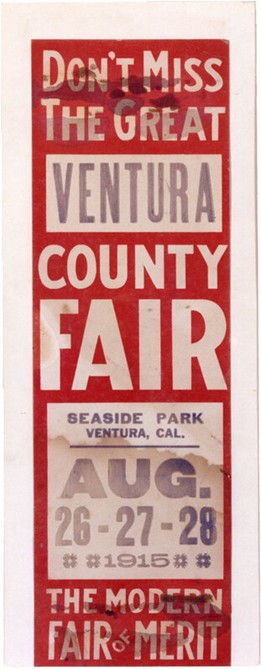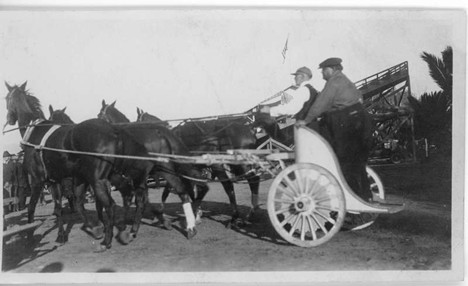

One of the first actions residents took after Ventura County separated from Santa Barbara County in 1874 was to celebrate a fall harvest festival. Bullfights, cockfights, horse races and a grand evening ball took place a few blocks from Seaside Park. A one-mile Ventura Trotting Park was built below the Pierpont bluffs. Over the next few years costumed knights jousted, mothers beamed at beautiful baby contests, and the public shared their livestock, agricultural products and home arts creations.
By 1891, civic leaders decided they needed a larger site and moved the fair to Port Hueneme. By this time the county fair was designated by the State as the 31st District Agricultural Association. Pride in Ventura County’s agricultural production was so intense that in 1892 the Board of Supervisors allocated $7,500 for Ventura County to erect a 23 ½ ft Bean Pagoda in the California Exhibition Hall at the World’s Columbian Exposition in Chicago.

The Ventura County Fair did not return to Ventura until 1913, made possible by Mr. E.P. (Eugene Preston) and Mrs. Orpha Foster who four years earlier had donated to the County the current 62-acre beachfront site.
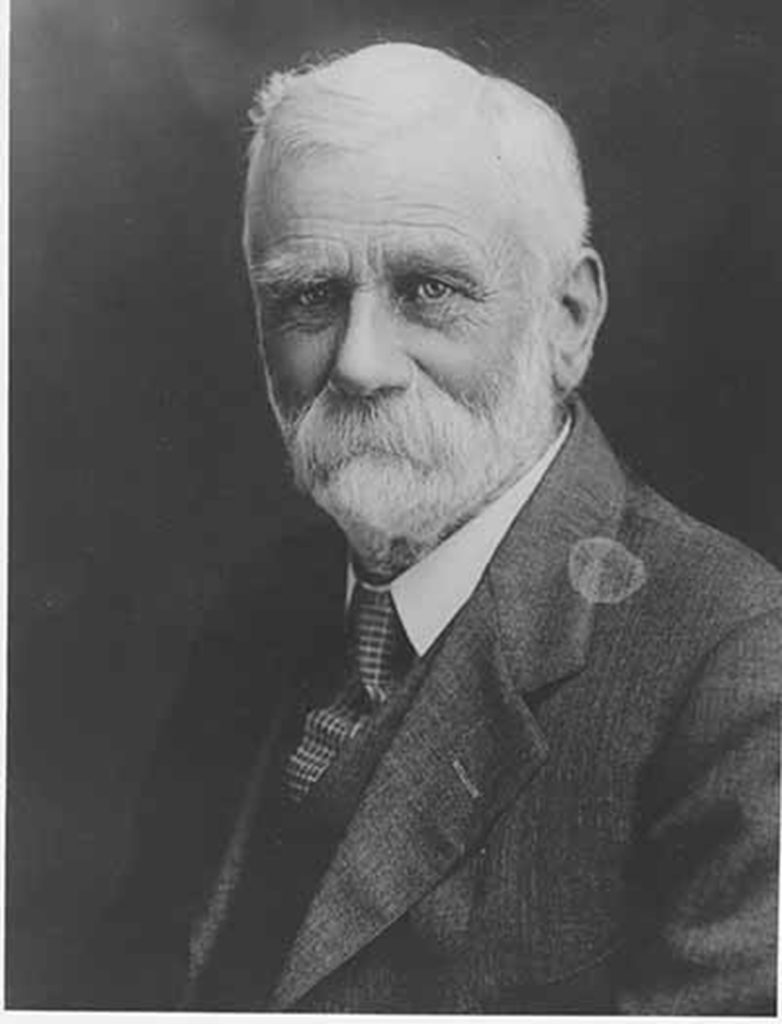
“Foster was a great admirer of Golden Gate Park, created on sand dunes in San Francisco, and designed by Foster’s friend, John McLaren. Foster’s dream was to design a similar park along the Pacific Ocean adjacent to the Ventura River…Foster supervised the planting of trees and shrubs on the property, assuring they could withstand the salt air and strong winds. Lawns were planted and picnic areas were established along with tennis courts and a smaller, one-half mile race track was laid out. Foster’s dream of recreating Golden Gate Park in Ventura was never realized, as the park was turned over to the State of California for a fairgrounds. Buildings replaced many of the trees and lawns. “[1] …The Foster family’s original deed of the property to the County envisioned the site as a “pleasure ground for the amusement, health and pleasure of the general public and to be known as the Ventura County Sea Side Public Park.”
[1] Historic Resources Report, 2717 N. Ventura Avenue, Ventura, CA, prepared by San Buenaventura Research Associates, October 17, 2012


Activities at the fairgrounds did not escape the economic hardship of the Great Depression. During the 30’s and 40’s, the grounds were landscaped and exhibits were held in tents.
During World War II, the federal government assumed control of Seaside Park and set up a command post over the artillery batteries and searchlights that were installed to protect the west coast of the United States. The military vacated the site after the war.
In 1946, the State purchased the property. After WWII, two large Quonset huts that had been aircraft hangers in Los Angeles County were relocated to the fairgrounds and placed in an area that had been the central lawn.
During the 1970’s and 1980’s, intense public discussions about the best use of the fairgrounds continued. Several civic leaders felt the site’s small size, bordered by the ocean, Ventura River and US 101, limited its revenue-generating potential. In the 1970’s a development group proposed selling the property for private redevelopment and using the revenue to build a thoroughbred racing facility somewhere in the east county where it would attract from the larger Los Angeles market. In 1979, the Board approved a study to evaluate a 202-acre site on Lewis Road near Camarillo.
In the mid 1980’s the Fair Board and City of Ventura jointly funded a Master Plan. The Master Plan envisioned a ring road for traffic circulation around the fairgrounds and demolition of the two Quonset huts to be replaced by an 80,000 sq. ft. multi-purpose facility. The City offered to set aside $11 million toward the facility’s construction, however a 1989 ballot measure organized by the “Save the Fair Committee” won. The plan for a new multi-purpose center was dropped.
The fairgrounds experienced other threats. During the recession of 2009, Governor Schwarzenegger proposed selling several State properties, including Seaside Park. Michael Bradbury, president of the Ventura County Fair Board declared Seaside Park “will not be sold, period. It’s a public treasure and a public trust.”
El recinto ferial del condado de Ventura está More than Cotton Candy and Cows. In addition to an annual fair, the fairgrounds is the emergency center for residents and animals evacuated from wildfires and other disasters. The Thomas Fire in 2017, and the Mountain Fire in 2024 were the most recent. During the COVID pandemic in 2020-22 residents lined up for their vaccinations in the fairgrounds parking lot.
The Ventura County Fair has also played a part in many notable events that reflect our country’s history. One was a race between Jesse Owens, the record breaking, Gold Medal winning track star at the Berlin Olympics in 1936, who by the 1950s, due to racism, was reduced to stunts like racing Johnny Barrios’ quarter horse “Shorty T” at the Ventura County Fairgrounds. Other unforgettable performances were by popular musicians like Jimi Hendrix in 1970, The Grateful Dead in 1987, and many others who headlined concerts here.
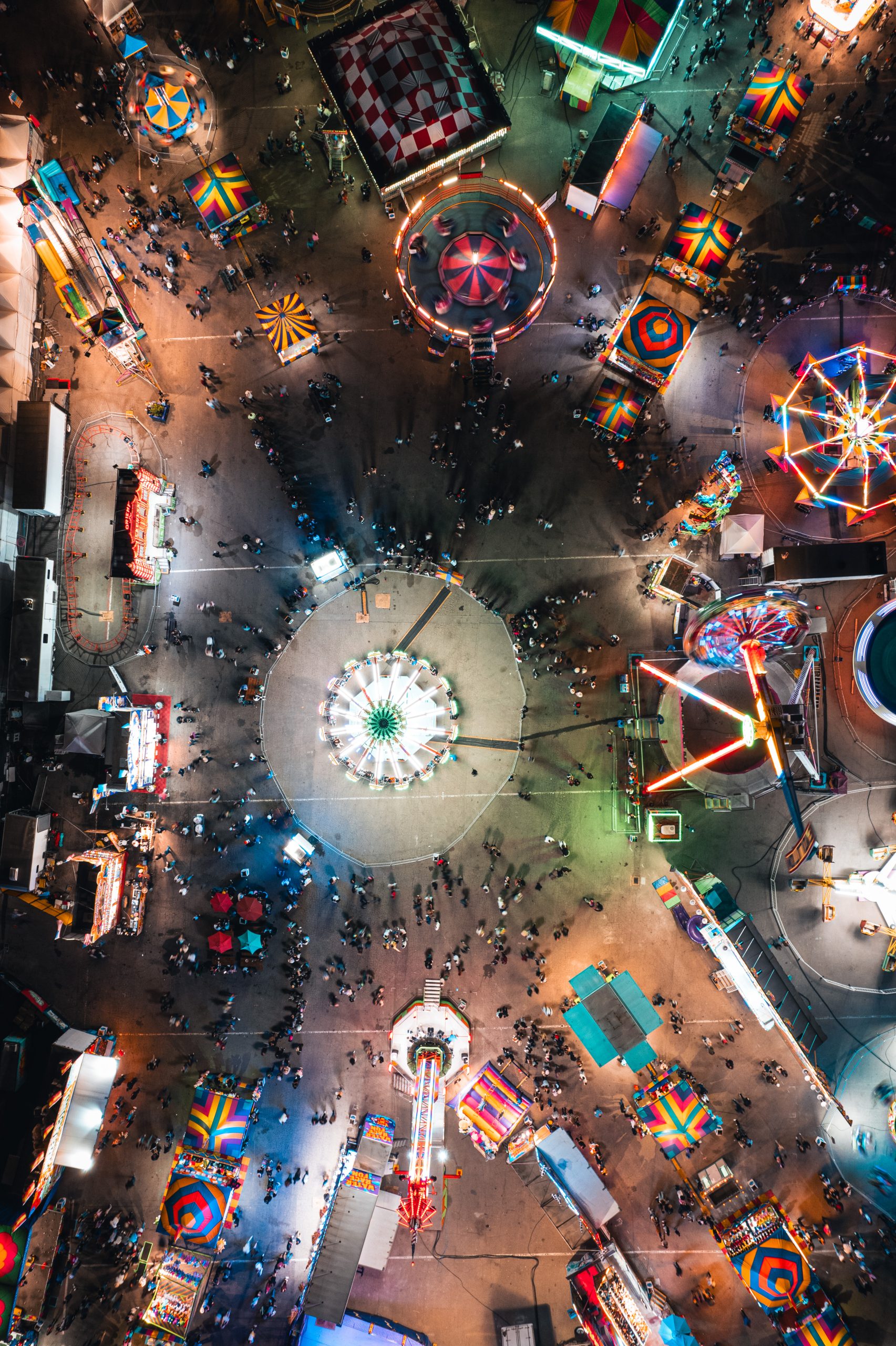
The Ventura County Fairgrounds, also known as the Ventura County Fairgrounds and Event Center, at one time Seaside Park, and still the 31st District Agricultural Association, now attracts more than 260,000 people to its annual fair with the help of more than 1,000 volunteers who manage the 8,000 entries of livestock. agricultural products, landscaping, floral design, art, photographs, gems and minerals, youth displays and home arts. An active Junior Fair Board organizes events throughout the year and spearheads the next generation of fair organizers. During the year, the Fair hosts privately sponsored exhibits and events nearly every weekend and national competitions like the X Games in 2023 and 2024, the Ventura County Strawberry Festival and the Throw Down Cornhole Festival have been held here.
The Ventura County Fairgrounds remains a public treasure in Ventura County to serve residents and visitors from near and far.